
Healthy Home Essentials Clean Water Air Purifiers and Fragrance Free Living

A healthy home rarely changes overnight. It usually starts with one honest look at the everyday things a family touches, breathes, drinks, and washes with.
After a recent client session about creating a healthier home environment, three themes stood out: clean water, cleaner indoor air, and fewer artificial fragrances. These are not flashy upgrades. They are practical changes that affect daily life, from morning showers to bedtime routines.
The good news is that families do not need to replace everything at once. A healthier home can be built in layers. Start with the exposures that happen most often, then choose simple tools that fit the space, budget, and habits of the people living there.
This guide walks through where to begin, what to look for, and which changes tend to make the biggest difference.

Start with the water your family drinks, cooks with, and bathes in
Water touches the body in more ways than most people realize. It is not only what goes into a glass. It is the water used for coffee, soup, pasta, baby bottles, pet bowls, teeth brushing, showers, baths, and handwashing.
Municipal water in the U.S. is treated to meet safety standards, and many homes rely on it every day. Still, treated water can contain chlorine, chloramine, sediment, disinfection byproducts, lead from old plumbing, or other contaminants depending on the home and local water source. Well water has a different set of concerns and should be tested regularly.
The best first step is simple: know what you are trying to filter.
Check your local water quality report if you use city water. If the home has older pipes, a lead test can be helpful. For private wells, use a certified lab for testing. Once the concern is clear, the filter choice becomes much easier.
Drinking water filters that make sense for everyday use
For drinking and cooking water, look for filters that carry NSF/ANSI certifications for the contaminants they claim to reduce. Certification matters because “filtered” can mean many things.
Common choices include:
Filter type | Best for | What to know |
Activated carbon pitcher | Chlorine taste, odor, some organic compounds | Easy and low-cost, but cartridges need regular replacement |
Faucet-mounted carbon filter | Drinking and cooking water at the sink | Convenient for renters or small spaces |
Under-sink carbon block filter | Better flow and less counter clutter | Good daily option if lead reduction is certified |
Reverse osmosis system | Broader contaminant reduction, including many dissolved solids | Wastes some water and may remove beneficial minerals |
Countertop gravity filter | Families who want simple setup without plumbing | Performance depends heavily on filter quality and certification |
Activated carbon filters are a practical starting point for many homes. They can improve taste and reduce chlorine odor, which often makes families drink more water simply because it tastes better.
Carbon block filters tend to have a denser structure than loose granular carbon. That can help reduce certain contaminants more effectively, especially when the product is certified for that purpose.
Reverse osmosis filters are a stronger option when the goal is broader reduction. They force water through a semi-permeable membrane and can reduce many contaminants that carbon alone may not handle. They are often installed under the sink and paired with a dedicated faucet. Some systems include a remineralization stage to improve taste.
The main rule is to match the filter to the concern. A filter that improves taste may not remove lead. A filter that reduces lead may not reduce fluoride. Read the label, look for testing, and replace cartridges on schedule.
Faucet water deserves attention too
Not every sink needs the same level of filtration, but bathroom and kitchen faucet water still matter. Children often rinse toothbrushes, fill cups, and wash hands at bathroom sinks. Kitchen faucet water touches produce, dishes, and cooking tools.
If a whole-house system is not realistic, a faucet-mounted filter or under-sink filter in the kitchen is a strong first move. For bathrooms, focus on old plumbing risks, visible sediment, and odor. If the home has older fixtures, letting cold water run briefly before using it for drinking can reduce water that has been sitting in pipes.
Avoid using hot tap water for cooking or drinking. Hot water can pull more metals from plumbing. Use cold water, then heat it separately.
Shower filters can support skin, hair, and comfort
Shower water is easy to overlook because no one is drinking it. But chlorine, chloramine, minerals, and sediment can affect how water feels on skin and hair. Some people find that filtered shower water feels less drying, especially in homes with heavily treated or hard water.
Shower filter options include:
Carbon shower filters
These can reduce chlorine, but hot water and fast flow may limit performance.
KDF filters
KDF media use a copper-zinc process that can help reduce chlorine and some metals. They often perform better than basic carbon in warm water.
Vitamin C filters
These can neutralize chlorine and chloramine. They may be useful in areas where chloramine is used.
Whole-house filtration
This treats water before it reaches showers, faucets, laundry, and appliances. It is a larger investment, but it can be useful when water issues affect the entire home.
A shower filter will not solve every water issue. It also will not soften hard water unless it is paired with a water softening system. Still, it can be a simple upgrade for families who notice dry skin, strong chlorine smell, or buildup on fixtures.

Improve indoor air with the right purifier in the right room
Indoor air can hold dust, pollen, pet dander, smoke particles, mold spores, cooking fumes, and chemicals released from household products. Opening windows helps when outdoor air is clean, but it is not always enough. Wildfire smoke, traffic pollution, high pollen days, and extreme temperatures can make ventilation harder.
That is where room air purifiers can help. A good purifier does not replace cleaning, ventilation, or moisture control. It supports those habits by continuously pulling particles, and in some cases odors and gases, out of the air.
The most useful purifier is the one that matches the room size and the main concern.
HEPA purifiers are the best starting point for particles
A true HEPA filter captures very small airborne particles, including dust, pollen, pet dander, and many smoke particles. For bedrooms, nurseries, living rooms, and play areas, a HEPA purifier is often the most practical choice.
Look for:
A true HEPA filter, not “HEPA-like”
A clean air delivery rate, often called CADR, that fits the room size
Replacement filters that are easy to find
A noise level the family can tolerate at night
No ozone generation
The purifier should be placed where air can move freely around it. Do not tuck it behind curtains, under a table, or inside a corner packed with furniture. Run it longer at a lower speed if the noise bothers anyone. Many families get better results when the purifier stays on most of the day instead of running only when the air feels bad.
Activated carbon filters help with odors and gases
HEPA filters are excellent for particles, but they do not remove many gases or smells. For cooking odors, smoke smell, VOCs from household products, or lingering fragrance, choose a purifier that includes a meaningful amount of activated carbon.
Thin carbon pads may help a little with odor, but heavier carbon filters tend to work better and last longer. Carbon becomes saturated over time, so it must be replaced as recommended.
A purifier with both HEPA and activated carbon is often the best all-around choice for family spaces.
HVAC filters can support the whole home
Room purifiers clean the air in specific rooms. The HVAC system can help with whole-home filtration if it uses the right filter and the system can handle it.
Many homes can use a MERV 13 filter, which captures smaller particles than basic fiberglass filters. But not every system performs well with a higher-rated filter. If the filter is too restrictive, it can reduce airflow and strain the system. When in doubt, ask an HVAC professional which MERV rating is safe for the equipment.
Change filters on schedule, especially during heavy use seasons. A clogged filter does not help air quality.
Be careful with ionizers, ozone, and UV claims
Some air cleaners use ionizers, ozone, or UV light. These features can sound appealing, but they are not always the best choice for occupied family spaces.
Ozone can irritate the lungs, even when marketed as “fresh” or “clean” air. For most homes, it is safer to choose a mechanical purifier with HEPA and activated carbon instead of a device that intentionally produces ozone.
UV light may help inside certain HVAC systems when designed correctly, but it does not replace particle filtration. For a typical room, filtration should come first.

Remove artificial fragrance from daily routines
Artificial fragrance is one of the most common hidden exposures in the home. It can show up in candles, plug-ins, sprays, laundry detergent, dryer sheets, cleaning products, trash bags, personal care items, and even some baby products.
The word “fragrance” on a label can represent a blend of many ingredients. Some fragrance chemicals can trigger headaches, respiratory irritation, skin reactions, or asthma symptoms in sensitive people. Scented products can also release VOCs into indoor air.
This does not mean a home needs to smell like nothing forever. It means the home should smell clean because it is clean, not because odors are being covered.
Start by removing the strongest sources
The easiest way to begin is to walk through the home and gather the obvious fragrance sources.
Common items to reduce or replace include:
Plug-in air fresheners
Synthetic candles and wax melts
Aerosol room sprays
Scented trash bags
Scented laundry beads
Dryer sheets
Strongly scented detergent
Perfumed surface cleaners
Artificially scented hand soaps
Switch to fragrance-free products when possible. This is different from “unscented.” Unscented products may include masking fragrance to hide chemical smells. Fragrance-free usually means no fragrance ingredients were added.
Laundry is a powerful place to start because scented detergent and dryer sheets sit against skin all day and transfer scent to bedding, towels, and furniture. Choose fragrance-free detergent and wool dryer balls instead of dryer sheets. If clothes hold old fragrance, wash them more than once and avoid fabric softener buildup.
Use scent only where it helps, and use it carefully
Natural scent can be pleasant, but natural does not always mean risk-free. Essential oils are concentrated plant compounds. Some can bother asthma, irritate skin, or be unsafe around babies, pregnant people, and pets. Cats and dogs can be especially sensitive to certain oils.
Safer fragrance-free and low-scent options include:
Fresh air when outdoor conditions are good
Baking soda in trash cans, shoes, and refrigerators
White vinegar for deodorizing some surfaces
Simmer pots with citrus peels, cinnamon sticks, or herbs
Fresh eucalyptus or rosemary in small amounts
Beeswax candles used occasionally with ventilation
Activated charcoal bags in closets or mudrooms
A simple simmer pot can make a home smell warm without synthetic fragrance. Add orange peels, a cinnamon stick, and a few cloves to a small pot of water, then simmer gently while someone is nearby. Turn it off before leaving the room.
For everyday odor control, the better fix is usually source removal. Take out trash, check for damp towels, clean pet areas, address moisture, and wash textiles. Covering odor can delay solving the real problem.
Choose cleaning products that do the job without perfume
Many people associate a strong scent with cleanliness. In reality, clean has more to do with removing soil, grease, dust, and germs where needed.
A basic fragrance-free cleaning kit can include:
Fragrance-free dish soap
Fragrance-free all-purpose cleaner
Hydrogen peroxide for certain surfaces
Baking soda for scrubbing
White vinegar for mineral deposits and glass
Microfiber cloths
A HEPA vacuum
Never mix cleaners, especially bleach with ammonia or vinegar. Keep products away from children and pets, even when they seem natural.
Fragrance-free living does not need to feel extreme. It can simply mean fewer chemical smells, calmer air, and products that serve a clear purpose.

Build a healthier home in a realistic order
Families often feel overwhelmed because every healthy home recommendation seems urgent. The better approach is to rank changes by frequency and impact.
Start with what happens daily:
Filter drinking and cooking water
Choose a certified filter for the kitchen. Replace cartridges on time.
Clean bedroom air
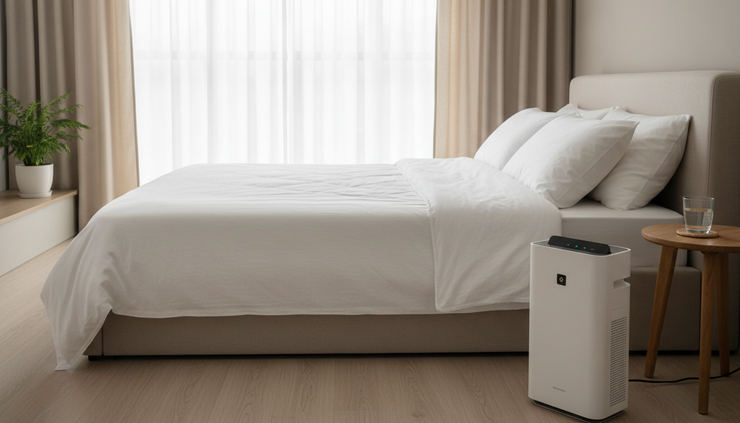
Put a HEPA purifier where people sleep. Run it consistently.
Remove artificial fragrance from laundry
Switch detergent first. Bedding, pajamas, towels, and clothing touch skin for hours.
Improve shower water
Add a certified shower filter if chlorine smell, dryness, or irritation is a concern.
Replace scented air products
Remove plug-ins, sprays, and wax melts. Use ventilation and source control instead.
Upgrade HVAC filtration if the system allows it
Use the highest MERV rating your system can safely handle.
Keep moisture under control
Use bathroom fans, fix leaks, and keep indoor humidity in a comfortable range to discourage mold growth.
Small changes stack. A kitchen filter makes water easier to drink. A bedroom purifier may reduce nighttime dust and pollen exposure. Fragrance-free laundry can make sheets and clothes feel cleaner, not heavier with scent.
A healthy home is not a perfect home. It is a home where the most repeated exposures are handled with care.
A simple room-by-room plan
A whole-home reset becomes easier when each room has a short checklist.
Kitchen
Install an under-sink, countertop, or pitcher filter for drinking and cooking water. Use cold water for cooking, then heat it. Replace plastic cutting boards when deeply scratched, clean the range hood filter, and avoid scented trash bags.
Bathroom
Add a shower filter if water smells strongly of chlorine or leaves skin feeling dry. Run the exhaust fan during and after showers. Replace scented hand soap with fragrance-free soap. Wash bath mats and towels often so scent is not used to cover mildew.
Bedrooms
Place a HEPA purifier in each main sleeping area if possible. Wash bedding in fragrance-free detergent. Keep strong-smelling products, candles, and sprays out of bedrooms. Sleep is a long exposure window, so cleaner bedroom air matters.
Living areas
Use a purifier sized for the room. Vacuum with a HEPA vacuum if available, especially with pets. Avoid plug-ins and synthetic candles. Open windows when outdoor air quality is good.
Laundry room
Choose fragrance-free detergent. Skip scent beads and dryer sheets. Use wool dryer balls to reduce static and drying time. Leave the washer door open after use to reduce musty smells.
The takeaway is to reduce what the body meets every day
A healthier home does not require fear, perfection, or expensive changes in every room. Focus on the basics your family encounters most: water, air, and fragrance.
Choose certified filters for drinking water. Consider shower and faucet filtration where it makes sense. Use HEPA and activated carbon air purifiers in the rooms where people spend the most time. Remove artificial fragrances from laundry, cleaning, and air freshening routines.
These changes are practical, visible, and easy to build on. Start with one filter, one purifier, or one fragrance-free swap this week. The home will not just smell cleaner or look cleaner. It will support daily life in a quieter, healthier way.
This article is for informational purposes only and is not medical advice. For specific health concerns, water contamination risks, or respiratory conditions, consult a qualified professional.



Comments