
You can STOP working so hard to get healthier.

What if the reason you've been struggling to make healthier choices has nothing to do with discipline, motivation, or drive — and everything to do with simply not having the right information?
We've been sold a story that getting healthier is supposed to be hard. That it requires white-knuckling through early morning workouts you hate, counting every calorie, and summoning some deep well of motivation every single day. And when we fall short? We blame ourselves.
But here's what I've come to believe: the missing ingredient almost never is willpower. It's information. When you truly understand what's happening inside your body — when you can see, measure, and respond to actual data — the right choices stop feeling like sacrifice. They start feeling obvious. Even easy.
Here are my top three recommendations for getting the information that will finally make health feel less like a battle and more like a partnership with your own body.
1. Wear a Health Tracker — I Swear by WHOOP
Before anything else, you need a window into your own body's daily reality. A good health tracker doesn't just count steps — it gives you a continuous, living picture of how every choice you make ripples through your physiology. In my experience — both personally and with my family — WHOOP is in a class of its own, and it's the one I recommend without hesitation.
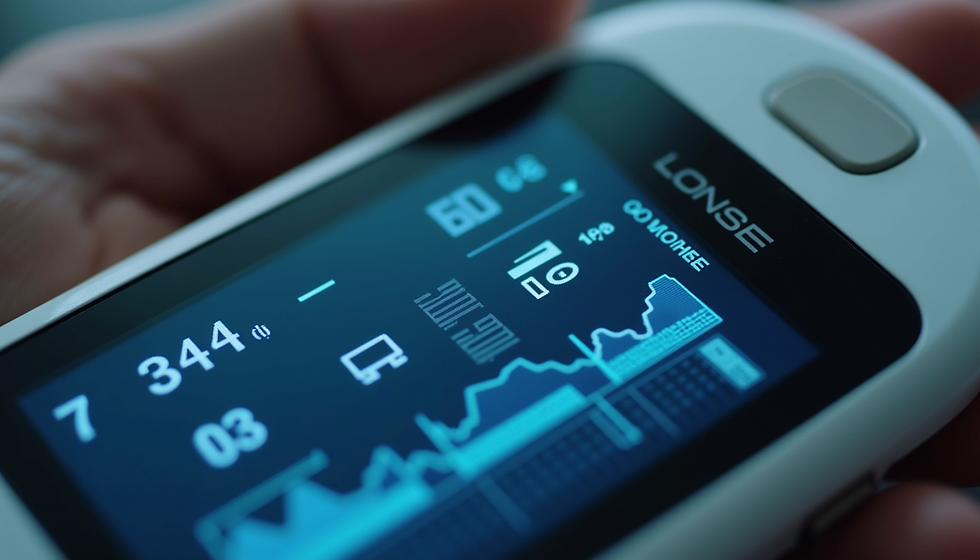
WHOOP is a screenless wearable designed not to distract you, but to quietly collect an extraordinary amount of biometric data around the clock. Each morning, it synthesizes everything into simple, actionable scores: your Recovery (how ready your body is for stress today), your Strain (how much cardiovascular load you've taken on), and your Sleep Performance — not just how long you slept, but how well.
What makes WHOOP genuinely transformative isn't any single metric — it's the feedback loop. You start logging things like what you ate, whether you had a glass of wine, how late you stayed up, or that stressful afternoon — and then you see how those choices affected your recovery, your heart rate variability, your sleep quality. It measures sleep stages, resting heart rate, respiratory rate, blood oxygen, skin temperature, stress levels, and so much more. It becomes undeniable.
When I can see that two glasses of wine dropped my recovery score and shaved time off my deep sleep, I don't need anyone to tell me to make a different choice. I know. That is the power of real-time, personalized data. You stop guessing and start responding. The whole family wears one — and it has completely shifted how we talk about health, from abstract goals to concrete, visible results.
You don't need more motivation. You need a mirror that shows you what's actually happening.

2. Get Comprehensive Bloodwork — Regularly
Your health tracker tells you how your body is performing day to day. Bloodwork tells you what's happening beneath the surface — the biological story unfolding at the cellular and molecular level that no wearable can yet detect.
Most of us have had blood drawn at an annual physical and been told "everything looks normal." But here's the problem: standard panels are designed to catch disease, not to optimize health. There is a significant difference between "not sick" and truly thriving — and your blood biomarkers can reveal exactly where you fall on that spectrum.
Think about it this way: you might be eating well and exercising consistently, yet feeling chronically tired — and never know that your ferritin is low, your Vitamin D is deficient, or your thyroid is underperforming. No amount of motivation fixes a micronutrient deficiency. But the right supplement, the right dietary shift, or a conversation with your doctor absolutely can.
I recommend going beyond the standard annual panel. Services like Function Health, InsideTracker, LabCorp, and Quest allow you to order comprehensive panels — sometimes 100 or more biomarkers — giving you a detailed biochemical map of your health. You want to understand your fasting glucose and insulin, your inflammation markers like hs-CRP, your full lipid panel, your hormone levels, your thyroid function, your nutrient status, and more. When all of that is in one place, patterns emerge that your symptoms alone would never reveal.
Make it a habit, not a one-time event. Bloodwork is most powerful when done consistently — every six to twelve months — so you can track trends over time and course-correct before small imbalances become real problems. The goal is not to obsess over numbers. It's to stop flying blind. When you know what's actually happening in your blood, every choice you make becomes informed — not guesswork.

3. Explore Your Genomics — Your Body's Owner's Manual
If bloodwork is a snapshot of where your health is right now, your genomics are the instruction manual you were born with. Your DNA contains a wealth of information about how your body is uniquely wired — how you process nutrients, respond to exercise, metabolize medications, manage stress, and what health risks you may be predisposed to.
Genetic testing for health has become remarkably accessible. What once required expensive clinical sequencing is now available through consumer platforms and clinical services alike. A simple saliva swab is all it takes — and what comes back can be genuinely life-changing.
Your genes can tell you things like how efficiently your body absorbs Vitamin D, B12, or iron — meaning you could be supplementing and still not getting what you need without knowing why. They can reveal how you metabolize caffeine, how your body processes alcohol, whether you have variants that affect folate metabolism (like the MTHFR gene, which impacts everything from mood to cardiovascular health), and whether you're genetically better suited to endurance training or strength work. They can flag predispositions to certain conditions — not as a sentence, but as a heads-up — so you and your doctor can be proactive rather than reactive.
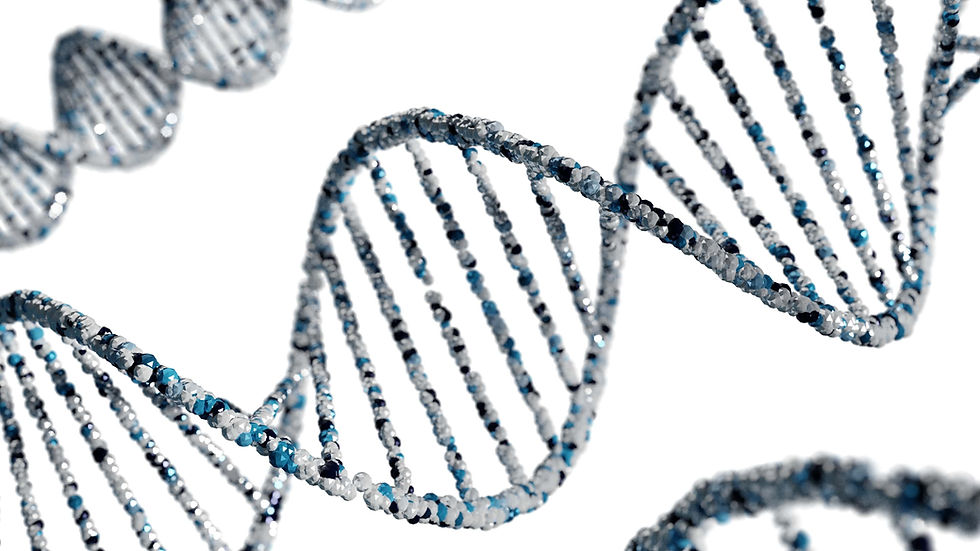
This is the piece that makes everything else click. When you layer your genetic blueprint onto your daily data and your bloodwork results, you stop wondering why certain things work for other people but not for you. You stop following generic advice and start following a plan that is actually built for your biology. That's not working harder. That's working smarter — with information only you have access to, because it literally only exists in you.
The bottom line is this: you were never lazy. You were never unmotivated enough. You were uninformed — and that was never your fault, because this information wasn't always easy to access. Now it is. Wear the tracker. Get the bloodwork. Understand your genes. Let the data do the heavy lifting, and watch how much easier the right choices become.


Comments